The Function of Fire-Rated Doors in Threat Monitoring: Commercial Garage Door Service Insights
The teams who live at filling docks and fleet garages recognize exactly how rapidly a peaceful change can turn into a shuffle. A pallet wrapper overheats, a charger arcs, a delivery van backs right into a bollard and kinks a fuel line. In those minutes, one of the most monotonous pieces of the building come to be heroes. Fire-rated doors resemble straightforward closures, yet they form exactly how warm, smoke, and panic relocation through a facility. Done right, they purchase time, maintain getaway courses, and keep a negative day from bankrupting a business.
I have actually spent lengthy nights under hoods changing guvs and long early mornings in fire assessments describing what we transformed and why. The patterns are always the very same. The right door in the right wall surface, appropriately mounted and checked, transforms a chaotic emergency into a well organized action. The incorrect door, or a good door preserved poorly, allows a tiny case eat with stock and disrupt procedures for weeks. This is where risk management satisfies the real life of Industrial Garage Door Service.
What "fire-rated" really indicates on the dock
Not every garage door can be fire-rated, and not every fire-rated design fits the abuse of an active dock. The hefty players in industrial openings are:
-
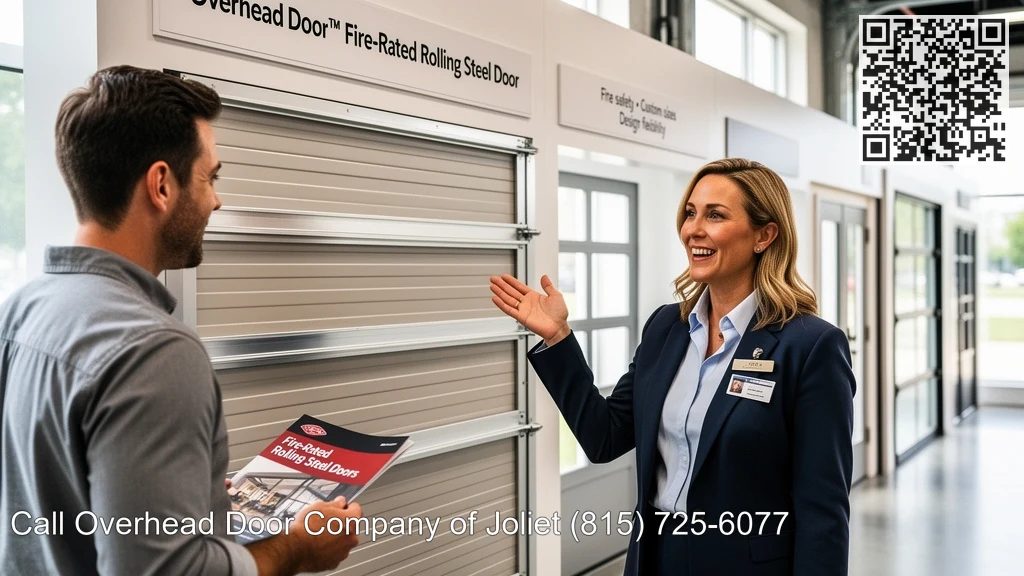
Rolling steel fire doors. Interlacing slats, steel guides, and a hood. They are common for separation between storage facilities and offices or along fire obstacles that crossed huge flooring plates. They close under their very own regulated descent when a heat web link thaws or a launch device journeys from the emergency alarm. Because they have few relocating parts subjected to forklifts, they hold up well in dynamic spaces.
-
Fire-rated counter shutters. Scaled-down rolling assemblies throughout solution counters in cooking areas, giving in areas, or parts windows. They commonly tie right into hood reductions systems and neighborhood warm detectors.
-
Fire-rated turning doors in steel frameworks. These are the man-doors next to the huge opening when egress is called for. Sectional overhead doors hardly ever bring an actual fire tag as a full setting up. You can spec fire-protective glazing right into a sectional, yet at complete size they normally offer traffic, not compartmentation. If you need a true fire obstacle across a big opening, rolling steel with a label is the workhorse.
-
Fabric fire drapes. They stay in the ceiling and decline on command. They beam in limited clearance situations or architectural areas that will decline a full hood. They are delicate to dust and impact damages, so think carefully prior to positioning them at busy docks.
A score is a time obstacle determined in mins or hours. In the United States, you see 20, 45, 60, 90, and 180 minute labels, evaluated to UL 10B or UL 10C for swinging doors and to UL 10D for rolling fire doors, with ongoing maintenance controlled by NFPA 80. Lots of openings likewise lug a different "S" label for smoke and draft control per UL 1784, which matters for egress hallways and stair units. The rating of the door have to match the ranking of the wall surface, and specific usage cases require smoke control also if the wall rating is modest.
From a risk point ofview, the story is easy. Fire-rated doors sluggish fire development, they avoid hot smoke from rendering egress routes unusable, and they lower convected heat transfer to high-value items. That time converts right into fewer sprinkled heads standing out, less drainage, smaller sized salvage costs, and shorter downtime.
The code and the carrier are both in the room
When we prepare Business Garage Door Installation across fire barriers, we juggle 2 voices. The building ordinance sets the life safety minimum, and your insurance firm sets the efficiency and documentation that influences premiums.
IBC and NFPA 101 spell out where fire obstacles and smoke compartments should land, and exactly how openings inside those obstacles act. The gist for business garages and distribution centers:
-
If a wall surface brings a 1 hour or 2 hour rating, the large opening punched through it should be protected with an examined and labeled assembly. Warehouses typically divide long bays with these obstacles to cap the size of a fire area.
-
When you have a ranked hallway or an exit unit nearby, openings that touch those paths require smoke control attributes. That normally implies gasketing, drop seals at the sill, and an S label, coupled with closing speeds that people can outwalk.
-
Doors that safeguard fire obstacles should fall short secure. If power passes away, they still require to close under gravity with a controlled price. That is why rolling fire doors have guvs and fusible web links in addition to electric motor control.
Insurers read the very same codes but think in terms of likely loss. FM International data sheets, for example, concentrate on product courses, shelf elevations, lawn sprinkler thickness, and the dimension of fire locations. A 16 foot by 14 foot rated opening up that car closes can be the difference in between a control setting sprinkler activation and a complete ER visit for your deductible. Many service providers will certainly request for your yearly decline examination documents throughout threat audits. A solitary binder with clean forms and photos can cut factors off your premium.
Picking the ideal rating and information for your situation
There is no one-size door. The selection lives at the intersection of threat, web traffic, and operations.
Consider a cross-dock incurable where vehicles are continuously organizing. You desire the obstacle in between dock and workplace to be a tidy 1 hour wall surface, with a 60 or 90 minute rolling fire door across the forklift door into the documents room and routine egress doors with closer and lock equipment. The moving door can keep up throughout the day on a magnetic release tied to the smoke alarm and journey closed only when smoke or warm claims it is time.
In a tire stockroom, the fire tons is much heavier and smoke is thick. Here, an S-labeled assembly that restricts smoke leakage makes good sense. Also if code does not demand the S tag at that particular opening, I advise it when egress courses pass close by. Smoke eliminates people long prior to flames do, and a basic perimeter seal https://ameblo.jp/caidenemnz348/entry-12974691942.html expenses much less than a single emergency room visit.
In a food distribution fridge freezer, you have a various opponent. Ice, thermal shock, and dampness will certainly penalize seals and guvs if you do pass by wisely. I have seen a gorgeous new rolling fire door take in month 2 because a person rinsed down the guides and the water iced up. Because instance, we included heating units at the overviews and switched the governor oil for a reduced temperature blend rated by the maker. We also re-positioned the examination link away from the evaporator blast.
Keep an eye on these information when matching items to demands:
-
Release approach. Heat web links supply local activation and are required, but alone they will certainly not react quickly to smoke remote from the opening. An appropriate fire door release gadget linked to the fire alarm panel offers early closing from smoke discovery and allows monitored power, reset, and testing.
-
Vision. If you need to see traffic on the other side, specify a detailed fire-protective glazing kit in the sizes allowed for the rating. Traditional wired glass can still serve in some ratings yet it shatters under impact, and modern-day ceramics or specialty glazing perform better. Do not field reduced or include a vision lite to a labeled drape or door after the fact.
-
Egress. Huge rolling fire doors are not legal egress doors. Message and protect a separate turning man-door with the best panic or fire exit equipment. When people intend to leave swiftly, you do not want them awaiting a drape to climb up or presuming just how to raise a chain hoist.
-
Speed and force. NFPA 80 caps the decrease rate of a moving fire door to a range that avoids injury. In practice, I target roughly 9 to 12 inches per second, smooth and foreseeable. If the door pounds or bounces, your guv setting is wrong and the examination will fail.
-
Environment. For seaside or chemical settings, pick galvanized or stainless slats, powder coat overviews, and closed bearings. In dusty mills or grain handling, keep drapes and launches away from dust collection air ducts and comply with Course II electric practices for launch devices as required.
The makeup of a compliant installation
The best Industrial Garage Door Installment starts with the wall surface. If the substrate is not rated and built appropriately, the finest fire door in the world will not pass inspection. I walk the opening with the GC before we order product. We confirm the wall kind, density, and size of the harsh opening, then select installing that keeps the wall ranking. For rolling doors, that may be face-of-wall mounting with fire-rated fasteners into structural participants, plus labeled head and jamb covers.
We coordinate with electrical early. Your fire door launch gadget needs power, a connection to the emergency alarm, and the ideal guidance. We choose a location for the reset station over day-to-day forklift strikes. For mechanized devices, we select operators detailed for fire door use. Numerous modern operators can drive the door day-to-day and still permit gravity fail-safe on launch. Some websites require a separate, long lasting website traffic door for consistent cycles and a fire door that keeps up until required. That is often the easiest and most reliable pair.
On site, we organize the slats, overviews, barrel, and hood away from debris that might contaminate the governor or bearings. We shim guides plumb and parallel, establish endlocks and windlocks per layout, and bench examination the governor prior to mounting the hood. As soon as the curtain is installed, we work examination hand-operated hand chain, electric motor controls, photo eyes if existing, and the fire release gadget. After that we trip the release and time the drop, reset the system, and complete all NFPA 80 paperwork with tags at the opening.
Throughout, we document. An inspector has a laborious, and clear photos of tags, bolts, and the launch electrical wiring will make their day and your own better.
The upkeep reality: tiny work currently or huge expenses later
Everyone nods when you mention NFPA 80's yearly drop test and examination. Fewer individuals plan time on the schedule and maintain records in a binder. The rule, in ordinary terms:
An annual decline examination is required for every fire door assembly, performed by an educated person, with outcomes recorded and uploaded. You need to check both automatic and hands-on closing attributes. If modifications or repair work are needed, you check once more after finishing them.
Monthly visual checks aid capture problem before the yearly. I try to find paint overspray on fusible links, bent bottom bars, wire battle royal on counterbalance areas, missing out on fire pins, greasy governors, and missing out on signage. We wipe down overviews and hoods. We inspect that magnetic hold-opens really let go when the alarm journeys. Often times, I locate a perfectly good door that will not launch since someone shut off the breaker feeding the launch tool years ago.
Common service items are inexpensive when caught early. A fusible web link prices much less than a bent slat run. A guv adjustment takes twenty minutes when you have accessibility and expertise, and it stops the kind of slam that terrifies employees and earns citations. We consist of these jobs in our Commercial Garage Door Service arrangements so clients do not question what is covered.
Costs issue. As of the previous 2 years in my region, a common yearly decline examination go to for a tool center runs 150 to 500 dollars per door depending upon amount and complexity, with fundamental parts additional. Changing damaged slats on a rolling door can range from 300 to 1,200 dollars per span, extra for windlocked or shielded models. Full substitute of a big classified opening may land in between 6,000 and 15,000 dollars mounted, with specialty coatings adding more price. Those are real dollars, but they look little alongside a five or six number claim.
When things go right, and when they do not
I remember a chilled cross-dock that had a battery fire in a tiny charger bay at 3:10 a.m. The operator on patrol hit the pull terminal and called it in. The rolling fire door between the charger bay and the primary fridge freezer dropped efficiently. Lawn sprinklers regulated the bay fire within 2 heads. The next day, procedures loaded vehicles from the rest of the dock while we changed two links, cleaned up soot from the guides, and reset the unit. Product loss was under 10,000 bucks, and the insurance firm commended the logs our customer kept.
Contrast that with a components stockroom that painted their fusible links to match a brand-new color design. When a pallet distress in a mezzanine storage space area set off lawn sprinklers and loaded the dock with smoke, the hold-opens launched, but the painted links stayed intact. The moving doors did not go down till the heat finally thawed the paint and the solder below. By then, smoke took a trip into an adjacent workplace and up into a return plenum, including weeks to the cleanup. That facility now has a paint mask, a training sheet for professionals, and a no-paint tag on every link.
Retrofitting without cutting into operations
Many customers ask just how to add defense without shutting the dock. The answer takes care sequencing and easy communication.
We begin with a survey when vehicles are lightest, commonly late morning between waves. We determine, evaluate the wall, and talk with traffic patterns. We buy material with preparations in mind. Stock rolling fire doors generally get here in 4 to 8 weeks. Custom-made colors, stainless plans, or large hoods can push to 10 to 14 weeks.
The actual swap often takes a day or 2 per opening for a simple substitute, longer if we are producing a brand-new opening or reinforcing framework. We organize product off the floor, barricade a safe area, and schedule electrical linkups throughout a lull. If an opening can not be down, we established a short-lived website traffic path or finish the job over a weekend. We completed with the decrease test, training for supervisors on resetting, and an electronic packet that consists of tags, handbooks, and the signed examination form.
Edge conditions and difficult cases
Fire-rated doors reside in the real world, not in illustrations, and the real world throws curveballs.
High-cycle docks. A door that cycles 200 times a day will wear out too soon if you depend on a moving fire door to do both fire security and everyday website traffic. I prefer dividing duties. Set up a high-speed website traffic door or a tough sectional for everyday flow, then place a moving fire door outboard, held up on a launch gadget, tired out just during an occasion or regular testing.
Public parking lot. The primary gates are usually not part of a fire barrier, yet secondary areas off the garage, such as trash areas or electric areas, need rated, self-closing moving doors with proper closers and locks. The lure to prop them open is constant. Use magnetic hold-opens tied to the alarm system and team pointers, not wedges.
Corrosive or damp settings. Watercraft lawns, chemical plants, or coastal anchors will consume unprotected hardware. Choose galvanization, stainless elements where supplied, and ends up designed for salt haze. Pay unique interest to the bottom bar and seal, which live in pools and slush.
Seismic and wind. In seismic zones, allow guide clearances and accessories that suit drift without binding the drape. In storm zones, coordinate between wind lots demands and fire score. You might require a separate wind-rated website traffic door and a protected fire door inboard due to the fact that really high wind scores and fire tags seldom exist side-by-side in a single huge assembly.
Sloped floors. Car slopes create unequal sill spaces. Plan flexible base bars or recessed limits to maintain smoke seals engaged where called for. A small daytime fracture along one edge of a smoke door defeats the point.
What to try to find in a solution partner
The market for garage door fixing and setup is crowded. Fire-rated job sits at the specific area where craft, code expertise, and documents satisfy. Before you sign an Industrial Garage Door Service arrangement, inspect a few basics:
- Active accreditations and familiarity with NFPA 80 and UL labeling, with techs who can show previous decrease examination tags they completed.
- A documented Industrial garage door repair work procedure that includes photographs, dimension logs, and circuitry diagrams saved and shared after each visit.
- Stock on hand for the brand names you own, including fusible links, endlocks, governors, and typical slats, plus a path to overnight uncommon parts.
- Coordination chops with electricians and alarm system service providers, because the cleanest mechanical mount falls short if the release tool is wired wrong.
- 24/ 7 action with particular escalation calls, not a basic inbox that gets up at 8 a.m.
I often ask new clients to let us perform one annual decrease examination check out prior to we price quote a long-term Garage Door Service contract. You find out a lot from exactly how a group deals with small surprises.
A short, sensible checklist for facility managers
Here is a tight routine that maintains your program out of problem without consuming your week:
- Walk each ranked opening monthly, trying to find damage, paint on links, blocked guides, and wedged egress doors. Break a picture of each.
- Test the emergency alarm release for one opening every month in rotation, with your alarm vendor's true blessing, to maintain staff proficient in resets.
- Label breakers and junction boxes that feed launch tools so nobody "briefly" kills power and forgets.
- Keep a binder or shared drive folder with the last three years of drop test forms, pictures, and any repair billings. Insurers like clean records.
- Train your painters and cleaners. They cause more unintended noncompliance than any kind of forklift.
Connecting danger administration to day-to-day operations
If you ask why fire-rated doors matter, miss the buzzwords and take a look at the map of your structure throughout a fire. Where do people come from, and where do they go. What has to maintain benefiting you to deliver tomorrow morning. The door in between threat and heart is hardly ever extravagant, yet it is quantifiable, testable, and trusted when respected.
Commercial Garage Door Setup is not simply hanging steel and plugging in electric motors. It is threading a needle between code, provider, and team. Industrial garage door repair service is not just flexing a lower bar right. It is understanding that a minor damage in the incorrect location comes to be a failing to shut under gravity, which comes to be a failed evaluation, which becomes direct exposure during an actual emergency situation. A fully grown Garage Door Service program looks plain theoretically and crucial when alarms sound.
I have seen executive teams grin when they understand that the thousand-dollar choice they made on a Tuesday conserved them from a million-dollar loss on a Sunday early morning. They usually call it good luck. It is not good luck. It is the slow build-up of sensible options at the limit in between rooms, examined and retested up until the structure behaves under stress.
Treat your fire-rated doors with that kind of respect. Couple the right assemblies with the appropriate wall surfaces. Integrate them with detection the method the typical intended. Maintain them clean. Examine them on schedule. File everything. And lean on an Industrial Garage Door Solution companion that sweats the little points so your people can maintain functioning, even when something warm and unanticipated shots to take the day away.
 Ask ChatGPT
 Ask Grok
 Ask Perplexity
 Ask Claude
 Ask Google AI
 Ask You